Passion and practical inquiry: Ara wraps up Research Week 2026
16 October, 2026
Five days of ideas culminate in a Three-Minute Thesis showdown
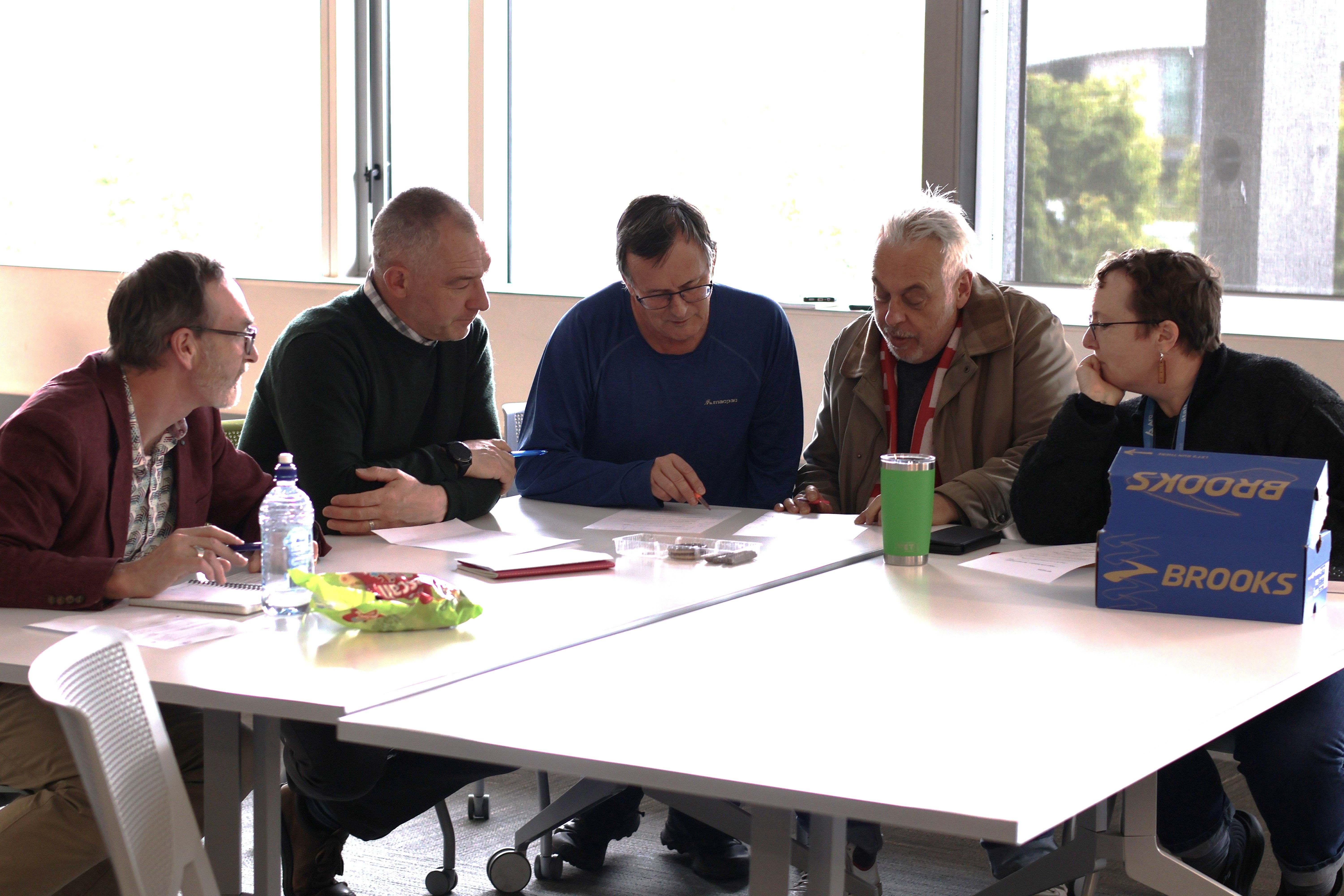
Three Minute Thesis judges carefully deliberate. The talks were short, but trophy decisions are serious business.
From exploring artificial intelligence and healthcare innovations to racing against a 180-second countdown in an inaugural Three-Minute Thesis competition, Ara Research Week 2026 closed after five days of ideas, collaboration and discovery.
Held across Ara’s City and Manawa campuses from 12 to 16 October, the lunchtime series offered kaimahi (staff) an informal space to connect over kai (food) and see first-hand how applied research within vocational education directly impacts industry, ākonga (students) and wider communities.
The week opened on Monday with Built Environment senior academic Sundeep Daggubati discussing how communities value post-earthquake regeneration, followed by Sport and Exercise Science principal academic Dr Peter Olsen’s practical advice on becoming research active at Ara.
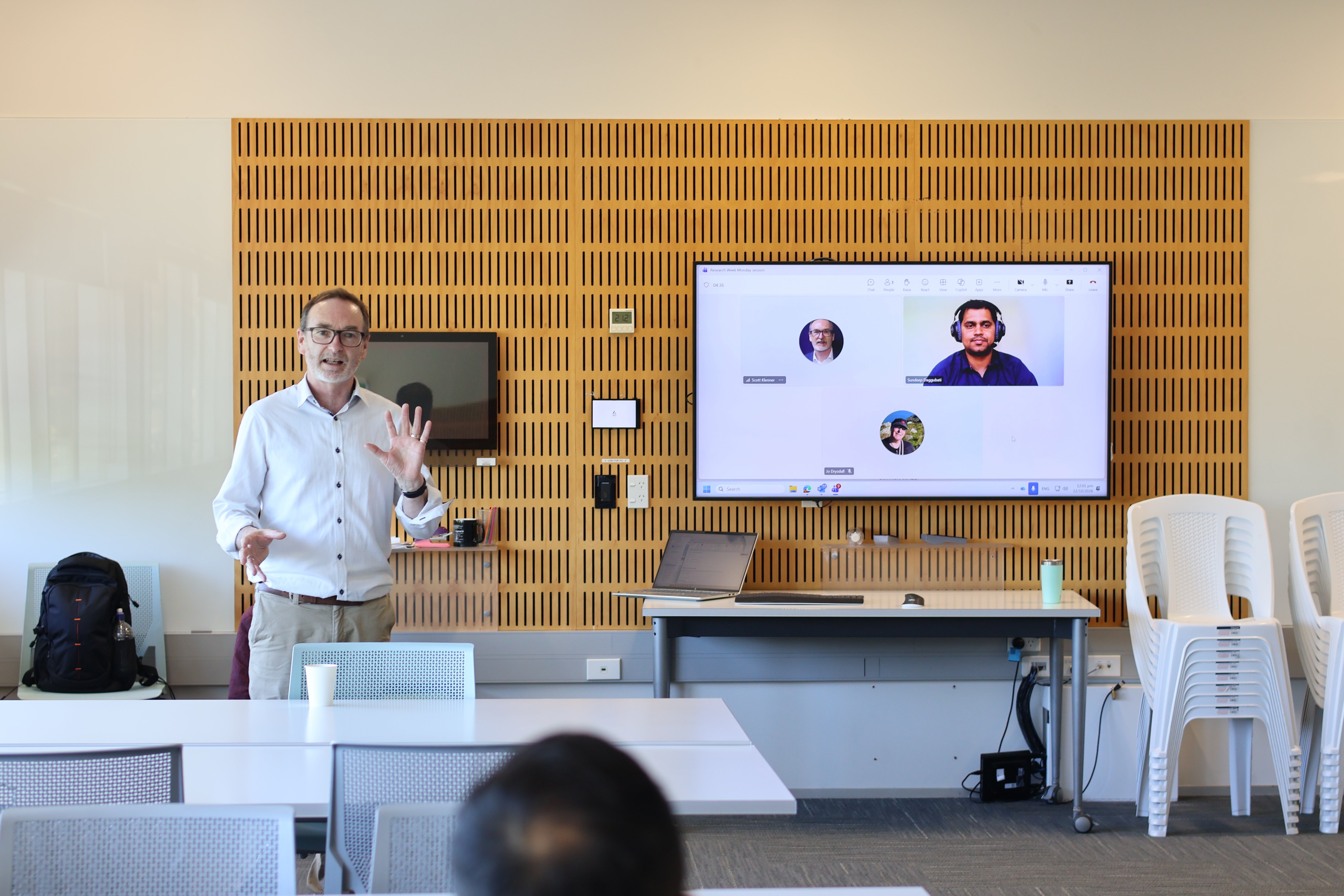
Scott Klenner, Ara Research Manager, opens Ara Research Week 2026.
On Tuesday, Dr Joanna Cobley spoke about building a research pipeline between teaching, marking and placements, while Dr Rea Daellenbach shared reflections on diversity and inclusivity from the Birthing Whānau study. Wednesday’s presenters were Dr Amit Sarkar, on pedagogy with AI, and Dr Graeme Harris, on simulation-driven research into a high-performance methanol-fuelled engine. On Thursday, Dr Tony McCaffrey explored performance, learning disability and research, and Dr Allen Hill considered sustainability capabilities in a post-sustainability world.
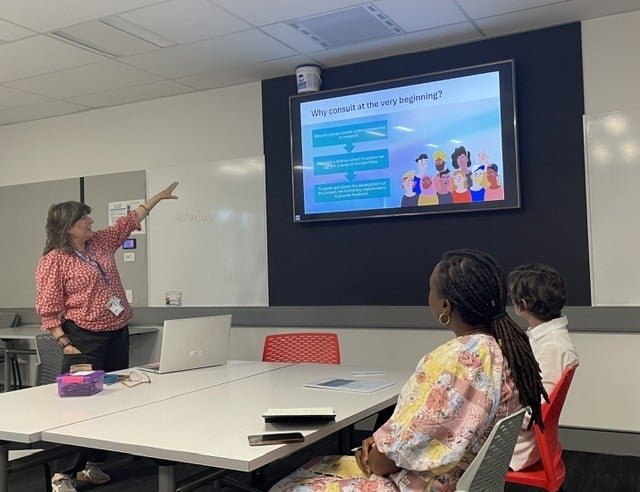
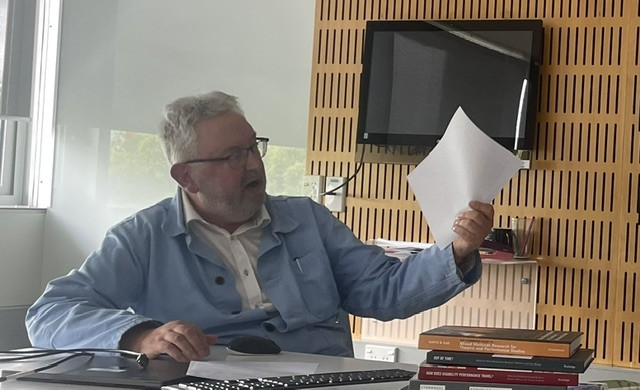
Drs Rea Daellenbach and Tony McCaffrey share their research with Ara colleagues.
Beyond formal findings, a recurring theme throughout the week was collegiality: opening doors between departments that might not ordinarily collaborate and demystifying the research journey for early-career researchers.
The final day opened with a candid panel discussion featuring Dr Cobley, Dr Olsen, Emma Fairs, Bruce Russell and Dr Hill, tackling one of the biggest hurdles facing vocational academics: how to build and maintain an active research portfolio alongside heavy teaching and leadership commitments.
The discussion took a modern turn when audience members asked how emerging technology fits into that equation: "We have no time for research, but now we have AI – what do you think about using AI?"
The panel weighed the efficiency gains and philosophical traps. While generative tools can speed up mechanical tasks, Dr Olsen cautioned against letting algorithms short-circuit genuine intellectual discovery, warning that over-reliance risks "robbing a generation of the best part of research – those 'aha' moments."
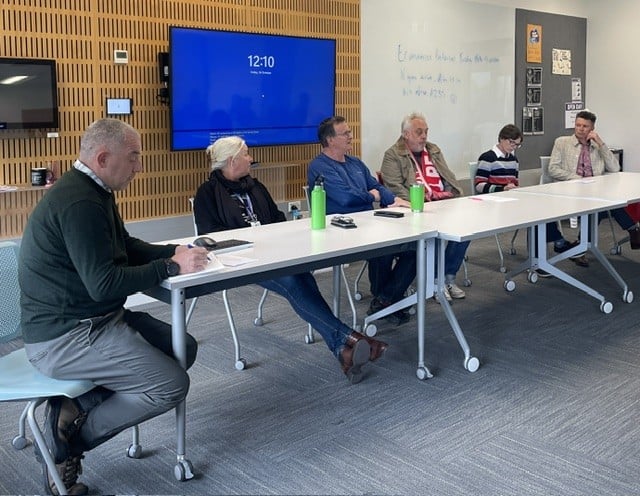
Left to right: panel facilitator Dr Jonathan Lynch, Emma Fairs, Dr Peter Olsen, Dr Bruce Russell, Dr Joanna Cobley and Dr Allen Hill.
Summing up the discussion, facilitator Dr Jonathan Lynch underscored three vital ingredients for sustainable research: maintaining an authentic passion for your subject, leaning into the mutual support of a research team and treating AI as a smart assistant that always requires a "human sandwich" of ethics, critical judgement and lived experience.
The week culminated with Ara’s inaugural Three-Minute Thesis Competition, where five researchers faced the daunting task of condensing complex, years-long inquiries into a single slide and a strict 180-second time limit.
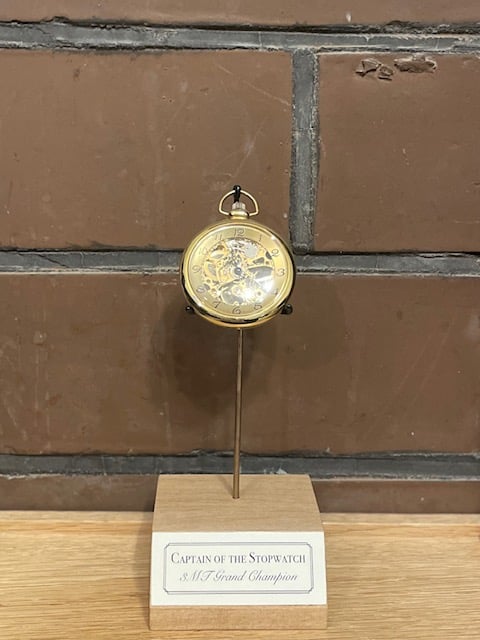
Opening the competition, Sundeep Daggubati shared the story of a couple walking along the Ōtākaro Avon River each weekend, sharing an ice cream to illustrate the challenge of quantifying emotional and cultural value. His findings revealed an intriguing contrast in post-quake Christchurch: while newcomers embrace the rebuilt river precinct as an open space for recreation, many long-time residents often struggle to locate the memories and landmarks they once cherished. Daggubati took away the Captain of the Stopwatch and the Smoothest Delivery awards.
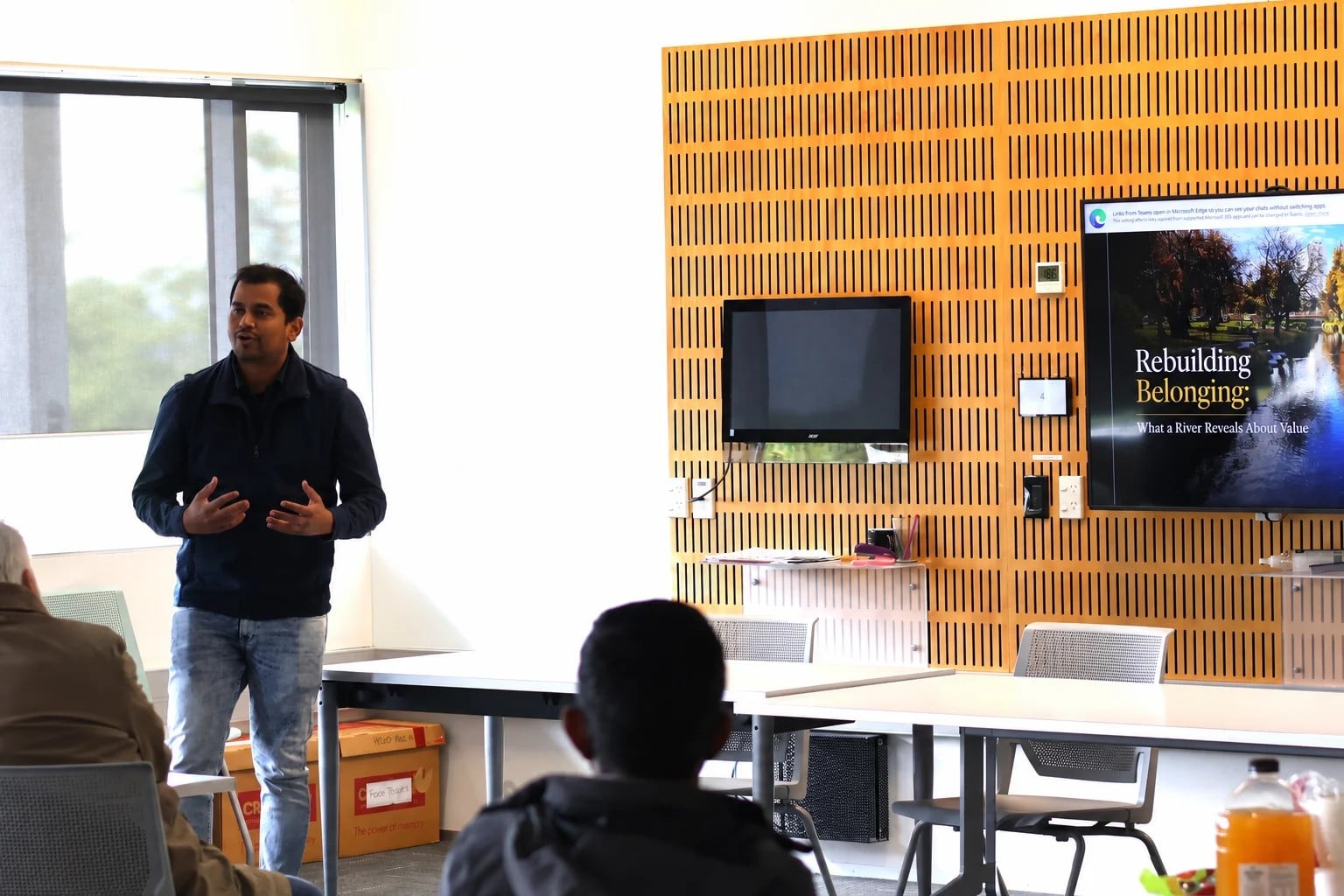
Sundeep Daggubati shares his research on belonging and the value of Christchurch’s post-quake Ōtakaro Avon River precinct.
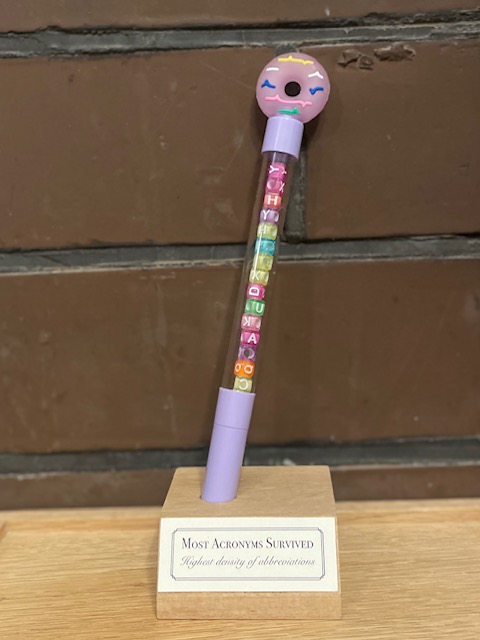
Dr Vimesh Paudel championed sustainable structural engineering, untangling the mechanics of cross-laminated timber (CLT) and shear walls in modern construction. Navigating dense technical terminology under the clock, he collected the Most Acronyms Survived award.
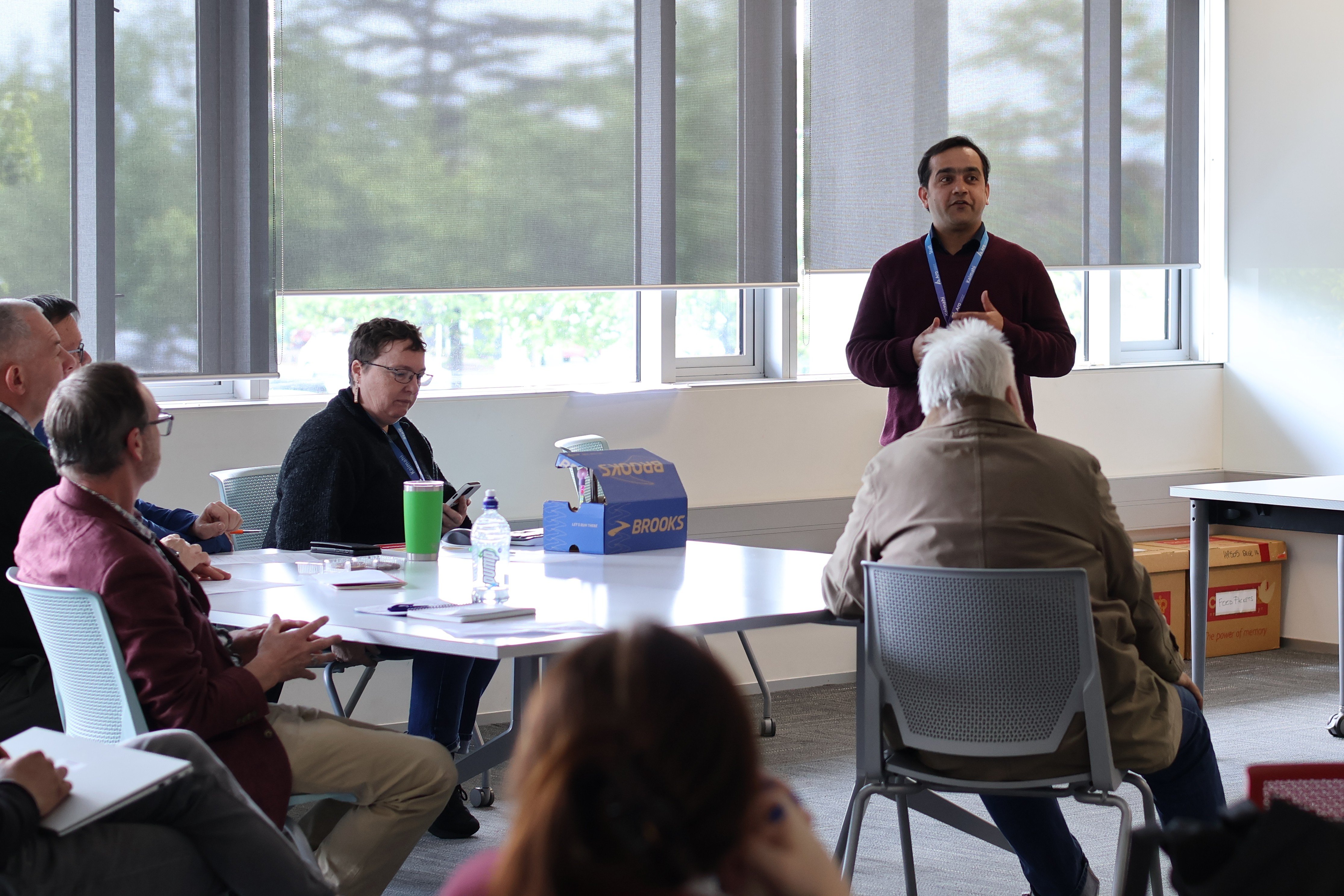
Dr Vimesh Paudel shares his research on timber structures and the changing role of timber in building design.
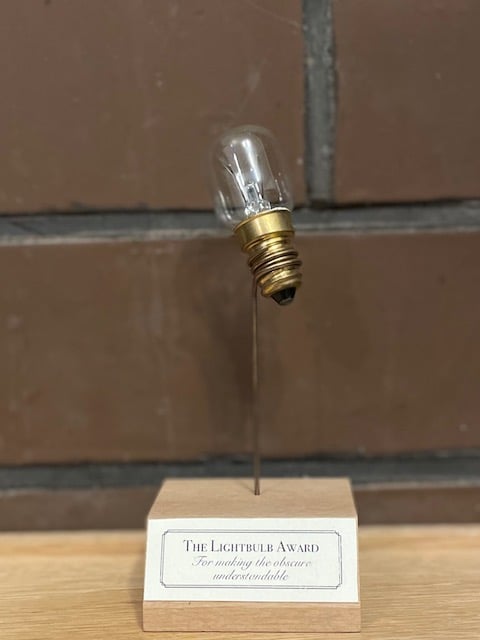
In an evocative presentation, visual arts doctoral candidate Kim Lowe explored how intuition, tohu, and ancestral connections guide her creative work. Touching on ancient jade burial suits, tea rituals and a pīwakawaka guiding her path toward a view reminiscent of a Ming Dynasty painting, Lowe explained how nature provides essential reflective space. Noting that in a Fire Horse year "water is needed to calm and still global fires," she linked these traditions to the fluid, watery elements of her practice, winning The Lightbulb award for making obscure concepts accessible.
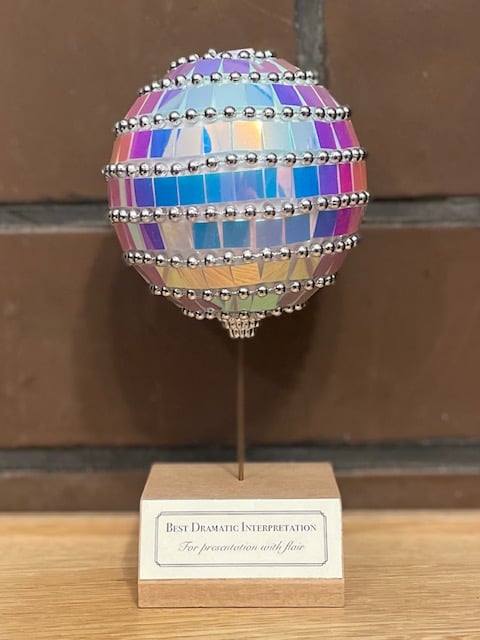
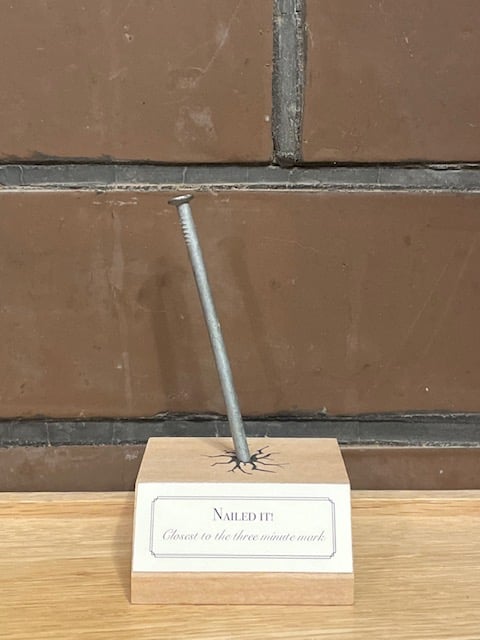
Kim Wood challenged the audience to rethink performance environments by asking whether an artist standing on stage at the Sydney Opera House is performing in the building, or whether the building itself is part of the performance. Presenting insights from her doctoral research, she explained that performance is relational, embodied and meaningful, taking home the Nailed It! prize (closest to the three-minute mark) along with the Best Dramatic Presentation award.
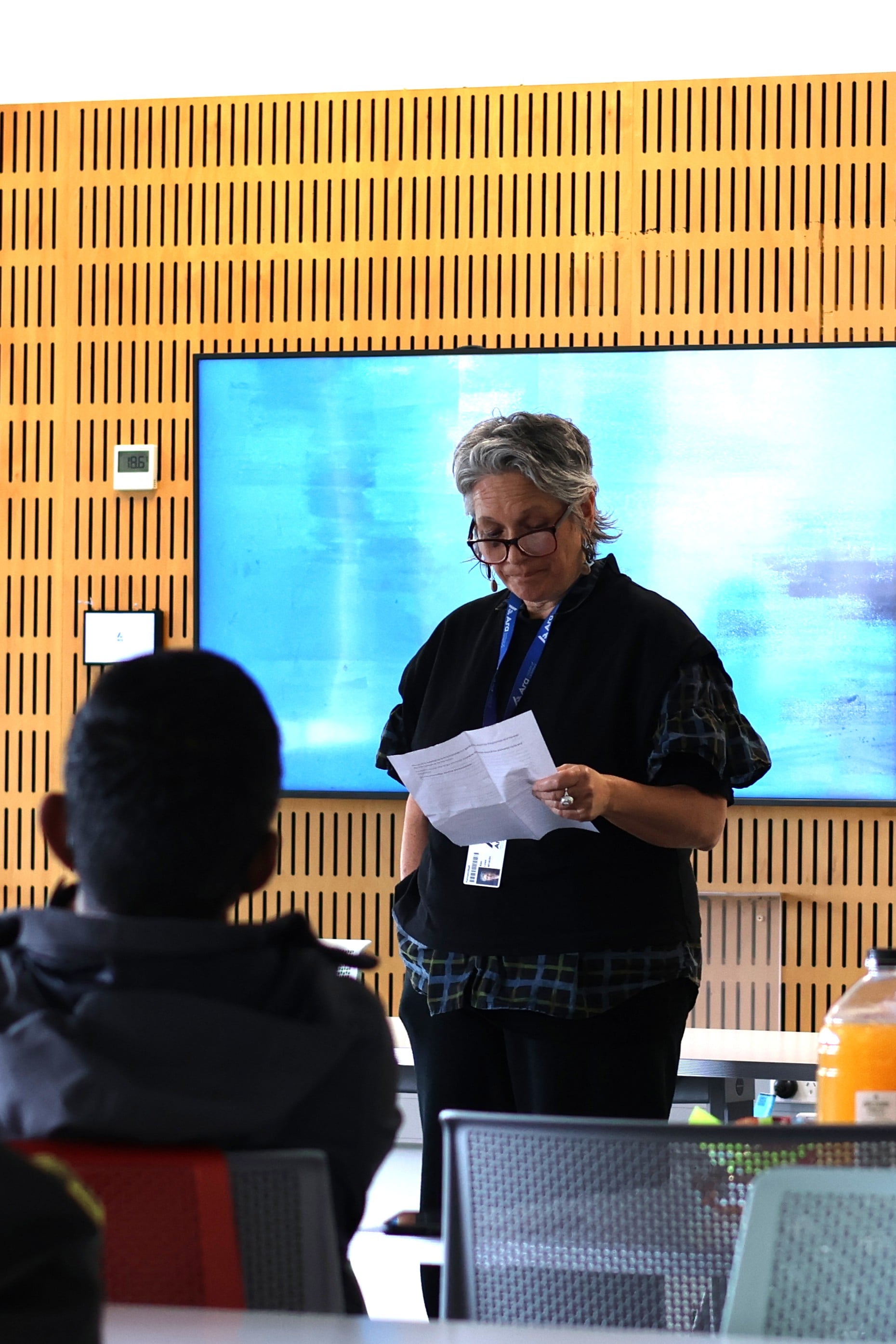
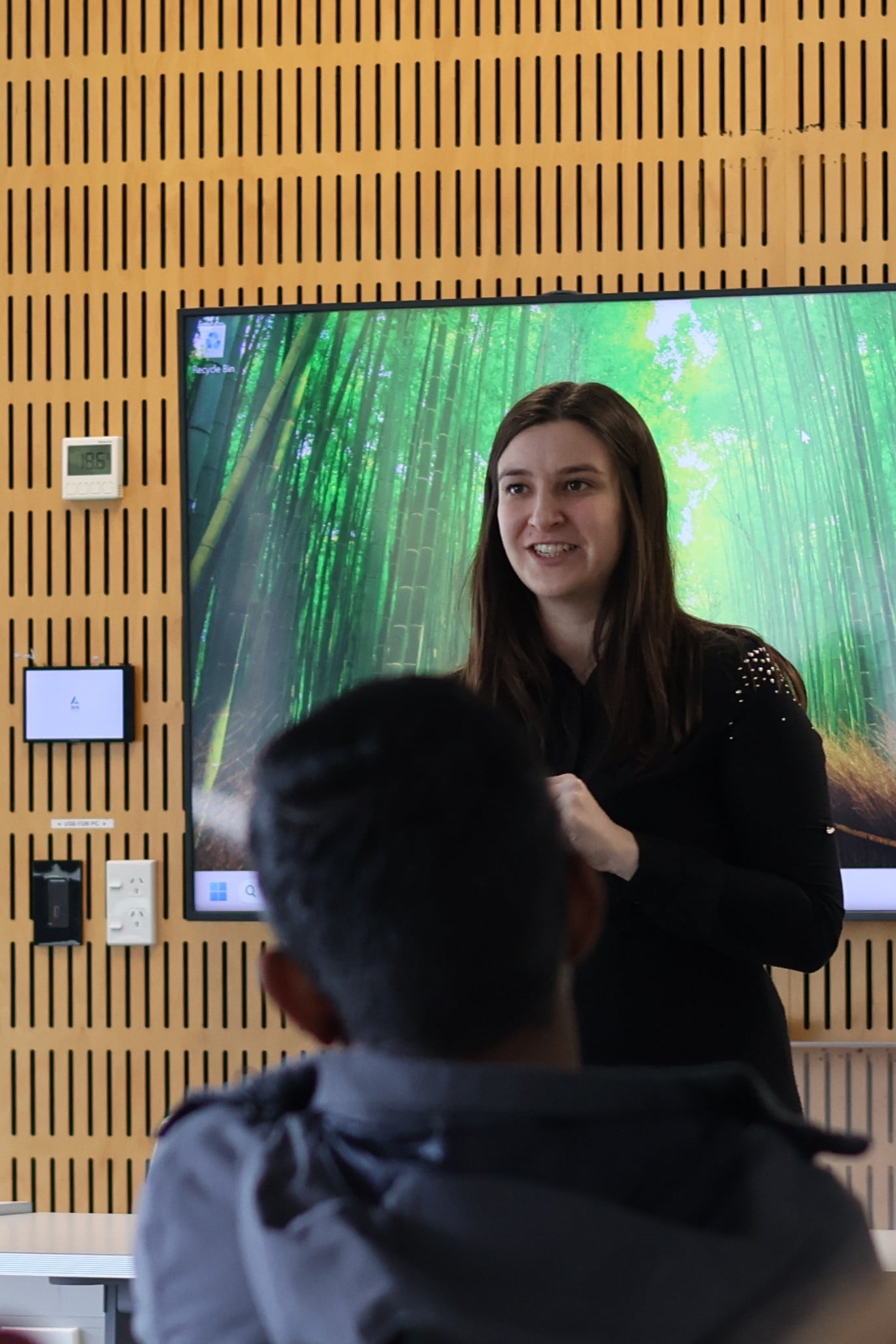
Kim Lowe and Kim Wood bring the vibrancy of visual arts and performance research to Ara’s inaugural Three-Minute Thesis competition.
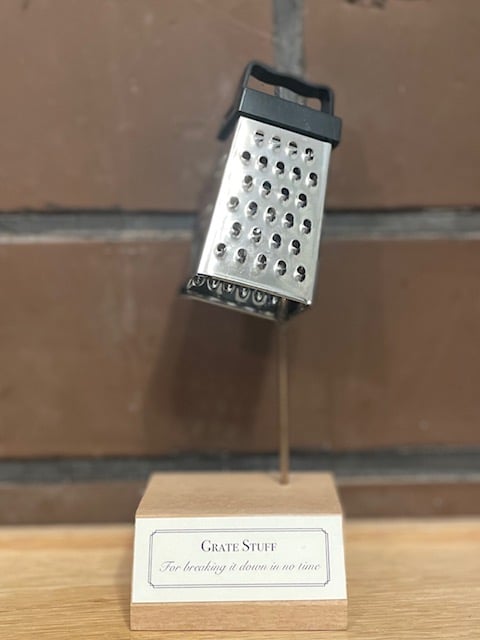
Closing the presentations, Andrew Hercus stepped onto the international sporting stage with his work with the International Olympic Committee’s Integrity Unit. Hercus is examining the protocols technical officials rely on to identify and mitigate match manipulation, earning the Grate Stuff award for breaking down high-stakes global regulations with clarity and speed.
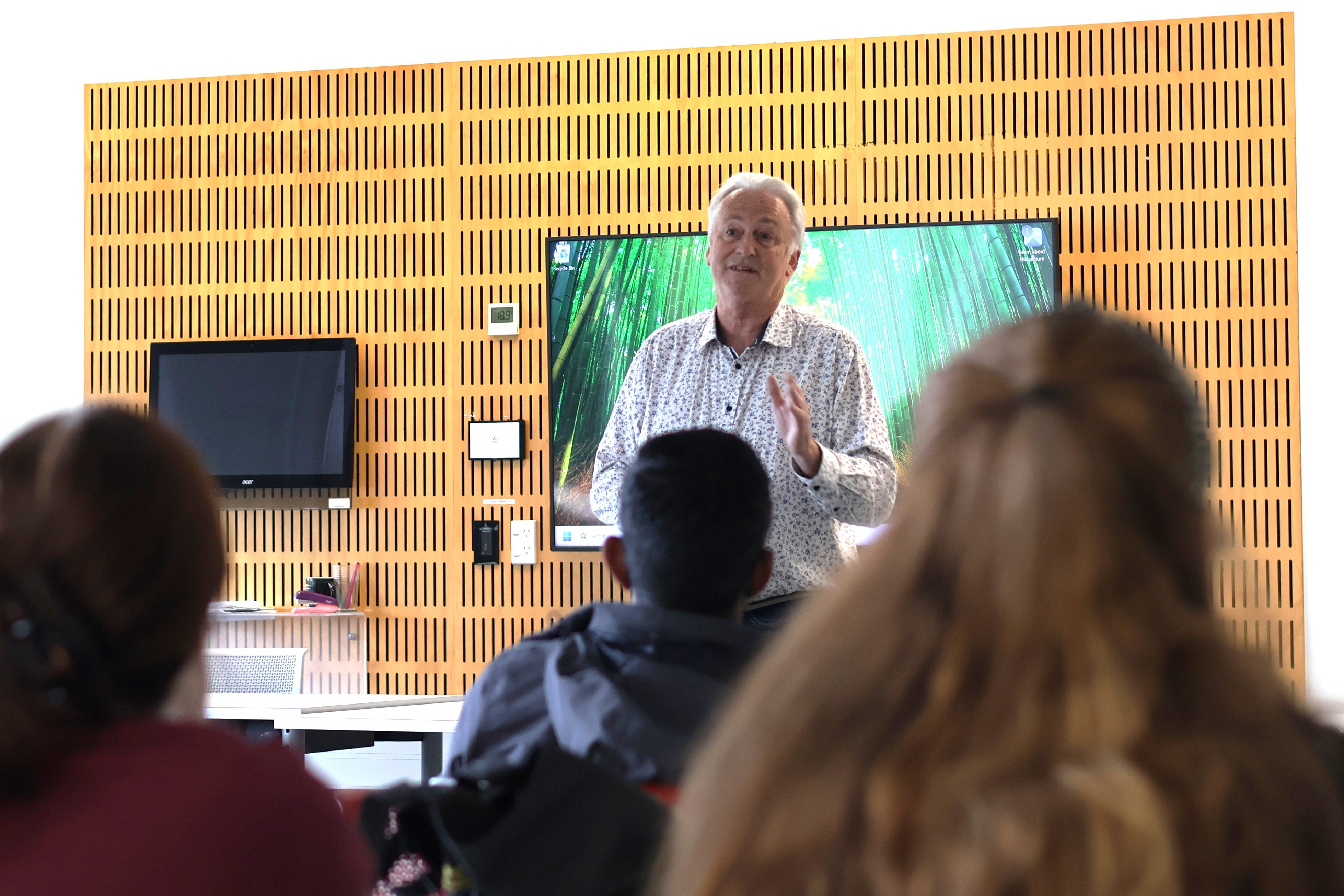
Andrew Hercus draws on his experience working at four Olympic Games as he presents his research on match manipulation.
Closing the week, Scott Klenner, Ara Research Manager, thanked all presenters, organisers and attendees for turning out in force, noting that the curiosity and camaraderie on display set a strong foundation for Ara's research culture heading into 2027.