Teaching through play: how gamification is reshaping project management learning at Ara
19 May, 2026
Gus Walkden uses escape rooms, gamification and AI to create engaging learning experiences

Gus Walkden has spent more than 13 years teaching business at Ara Institute of Canterbury. For the past three of those, his project management ākonga (students) have been doing something you won't find in most polytechnic assessment schedules: building escape rooms.
The idea came out of a period of academic study leave focused on gamification - the use of game mechanics to increase student engagement. Walkden, who holds master's degrees in both electronics engineering and business administration, had been thinking about the problem of engagement long before he had a name for the solution.
"I'm an engineer by training," he said. "I think in systems. I wanted to understand what was actually driving or reducing engagement, and whether I could design something better."
The result is an assessment in the AMPM600 Project Management course that asks student groups to design hands-on puzzles based on project management concepts - risk management, scheduling and stakeholder engagement, to name a few.
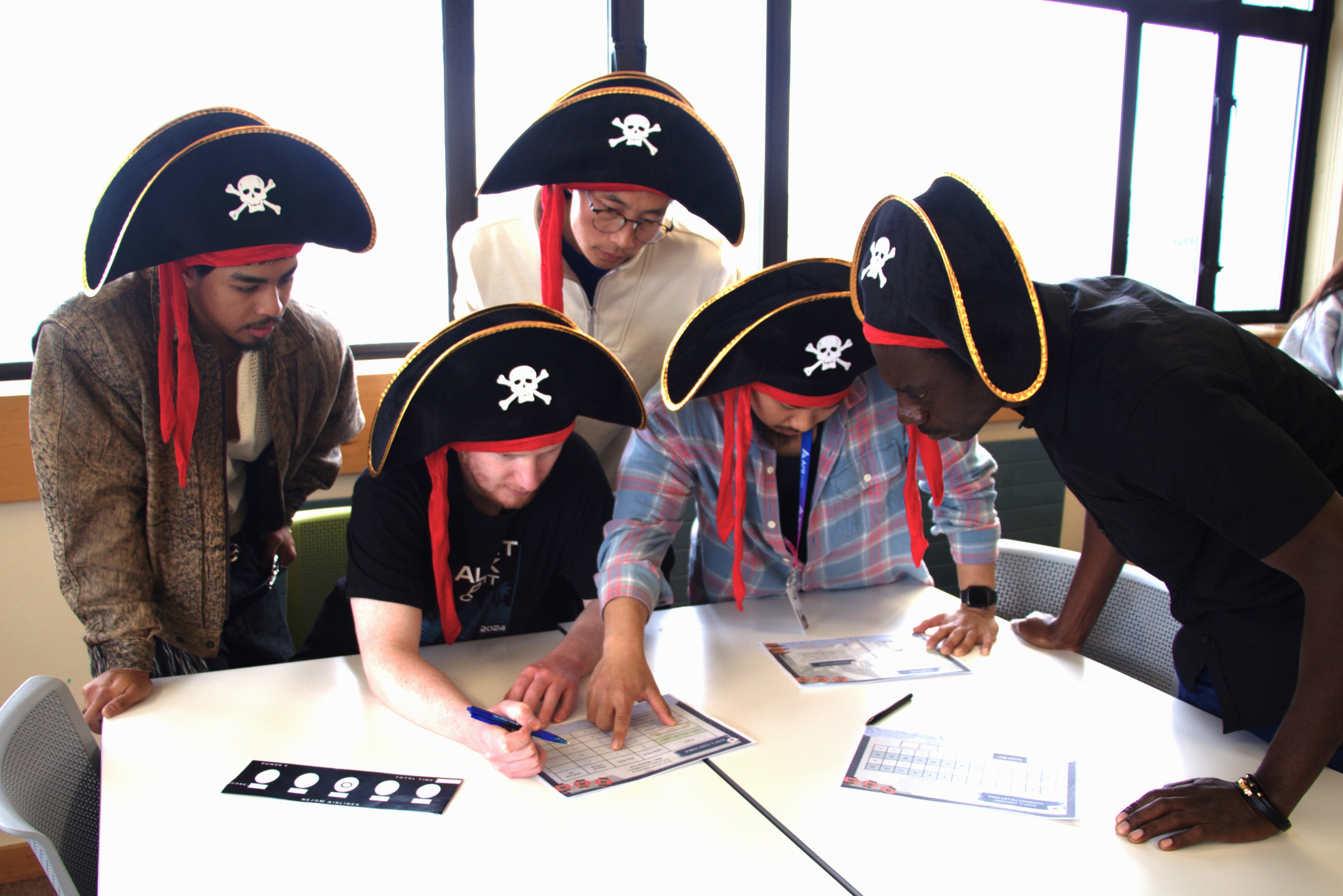
Students in 2025 went all in, matching their outfits to their escape room puzzles
Over ten weeks, teams develop their puzzles while studying the theory that underpins them. In week 11, they test each other's work. Students encounter the same material four or five times over, each time in a different configuration and from a different angle.
"It's a low-risk assessment that allows students to apply what they've learned in a fun, collaborative way," Walkden says. "It's become a highlight of the course."
Four years of running the assessment have produced consistent results: higher engagement, stronger group cohesion and graduates who leave with something tangible to add to a CV.
The assessment also develops the soft skills employers consistently say they're looking for - communication, problem-solving and the ability to work under pressure alongside people you didn't choose.
The approach has attracted attention beyond Ara. Last year's session was attended by Dr Lulu Barry, Director of Engineering Management at the University of Canterbury (UC), and Pierre Pienaar, UC lecturer and chair of the Project Management Institute's Christchurch chapter. Dr Barry has indicated plans to run a similar activity at UC, with a potential regional competition between institutions on the horizon.
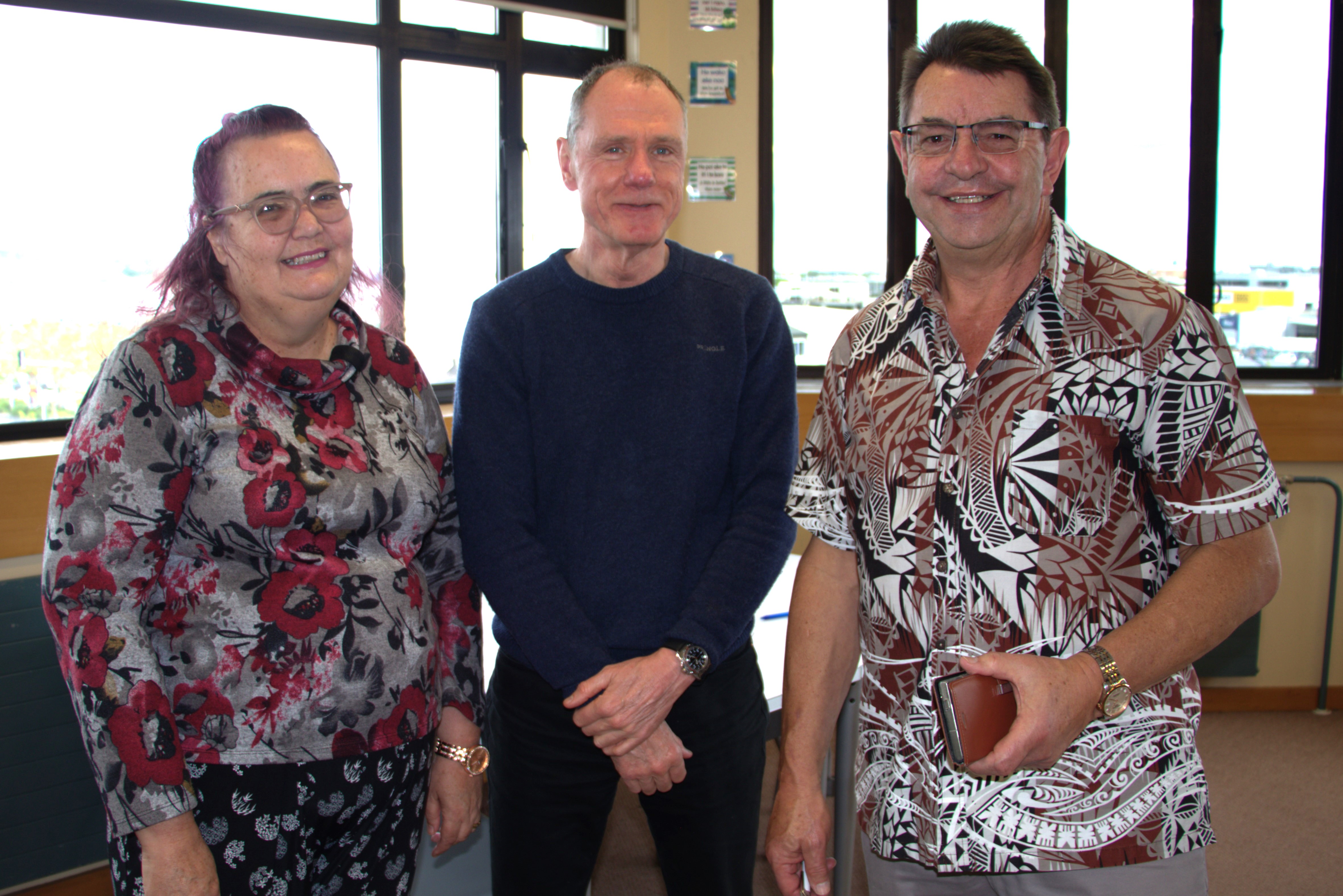
Left to right: Dr Lulu Barry, Pierre Pienaar and Gus Walkden
Walkden is also an early and committed adopter of AI in his teaching practice, something he noted with a wry sense of amusement, given that his 1988 master's thesis used artificial intelligence as a core tool.
"AI only really surfaced in the public domain two or three years ago," he said. "I was ready to accept it because it had been part of my life since well before then."
He sees AI and gamification as complementary forces in the future of applied learning, a view he has shared beyond Ara, including at public events in Christchurch where he's spoken about AI's practical applications for business and everyday life.
For Walkden, the research isn't abstract. It lives in the classroom, in the results his students achieve, and in the careers they go on to build.
"Our students learn by doing," he said. "They take the theory, apply it in a practical setting, and come away with skills and confidence they can use in any workplace. That's the real value of applied learning."
Enrolments are now open for Ara's July intake. If you're interested in studying business in a hands-on, practical environment - the kind where you might find yourself building an escape room - explore our courses and apply.